
Why Landing Pages Matter More Than Ever in Today’s Economy
In an economy where every marketing dollar is scrutinized twice before it’s spent, businesses can’t afford to send paid traffic into the void. Ad costs are climbing, attention spans are shrinking, and customers are more skeptical than ever before they hand over an email address — let alone a credit card. This is exactly why a well-designed landing page has quietly become one of the highest-leverage assets in digital marketing: a single page built to do one job extraordinarily well, at a moment when doing one thing well outperforms doing ten things adequately, this fits into our broader guide on web design services.
What Is the Purpose of a Landing Page?
A landing page’s purpose is deceptively simple: convert a visitor into an action — a signup, a purchase, a booking, or a download. Unlike a homepage, which has to serve dozens of competing goals, a landing page strips away distraction. There’s no wandering navigation menu and no competing offers pulling attention away from the goal. Every headline, image, and call-to-action button is built around one clear next step. A strong landing page acts like a digital handshake: direct, confident, and unmistakably clear about what it’s offering and why the visitor should care. This focus is also what makes landing pages a core tool in conversion rate optimization (CRO) — they give marketers a controlled environment to test messaging, layout, and offers without homepage-level complexity.
Landing Page Pros and Cons
That focus comes with real trade-offs.
Pros of a dedicated landing page:
- Fast to build, launch, and A/B test against different campaigns
- Easy to personalize messaging per audience segment or traffic source
- Gives marketers granular, campaign-level conversion data
- Improves ad quality scores and lowers cost-per-click on platforms like Google and Meta
Cons of a dedicated landing page:
- Can feel transactional or disconnected if the design doesn’t match the rest of the brand
- Generic templates and vague copy can actively hurt credibility instead of building it
- Requires ongoing testing and maintenance to stay effective
- A weak landing page can turn ad spend into wasted spend almost instantly
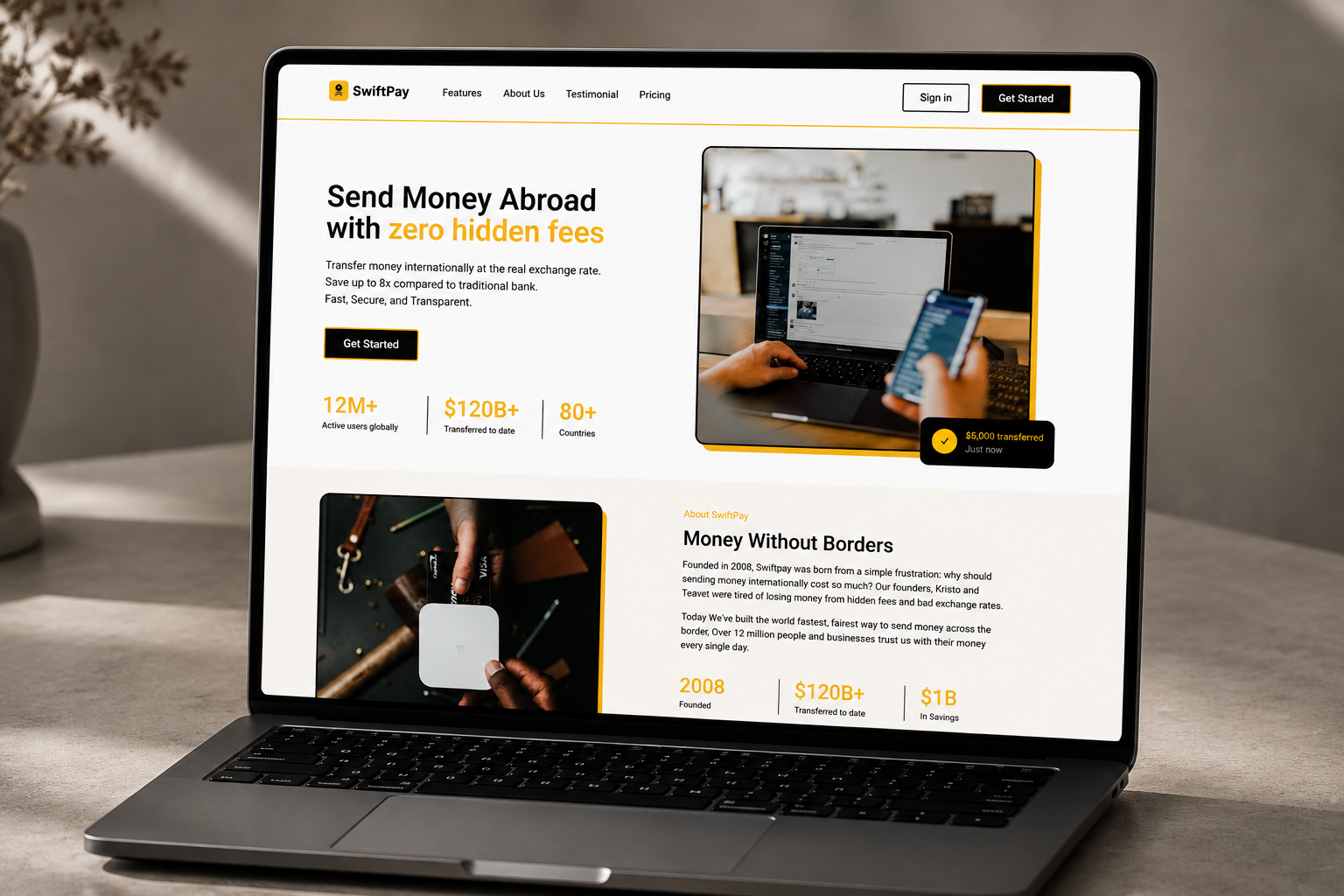
The Impact of a Landing Page on Brand Trust
This is where landing page design quietly intersects with brand strategy. For many visitors, a landing page is their first real encounter with a company — often before they’ve seen the homepage, read a review, or scrolled a single social post. The color palette, pacing, photography, and even the whitespace communicate brand values before a single word is read. A beautifully crafted landing page can make a small business feel established and trustworthy; a clumsy one can make even a well-funded brand feel careless. In a market where consumers are actively looking for reasons to say no, that first impression carries outsized weight — making landing page design as much a branding decision as a conversion tactic.
Key Takeaway
A landing page is where marketing strategy meets real-world scrutiny — the place where a brand’s promise gets tested against a stranger’s skepticism, page load speed, and about thirty seconds of patience. Get it right, and it becomes a tireless, always-on salesperson. Get it wrong, and it becomes the reason a perfectly good ad budget disappears without a trace. In a cautious economy, that difference isn’t cosmetic — it’s the margin between sustainable growth and wasted spend.